
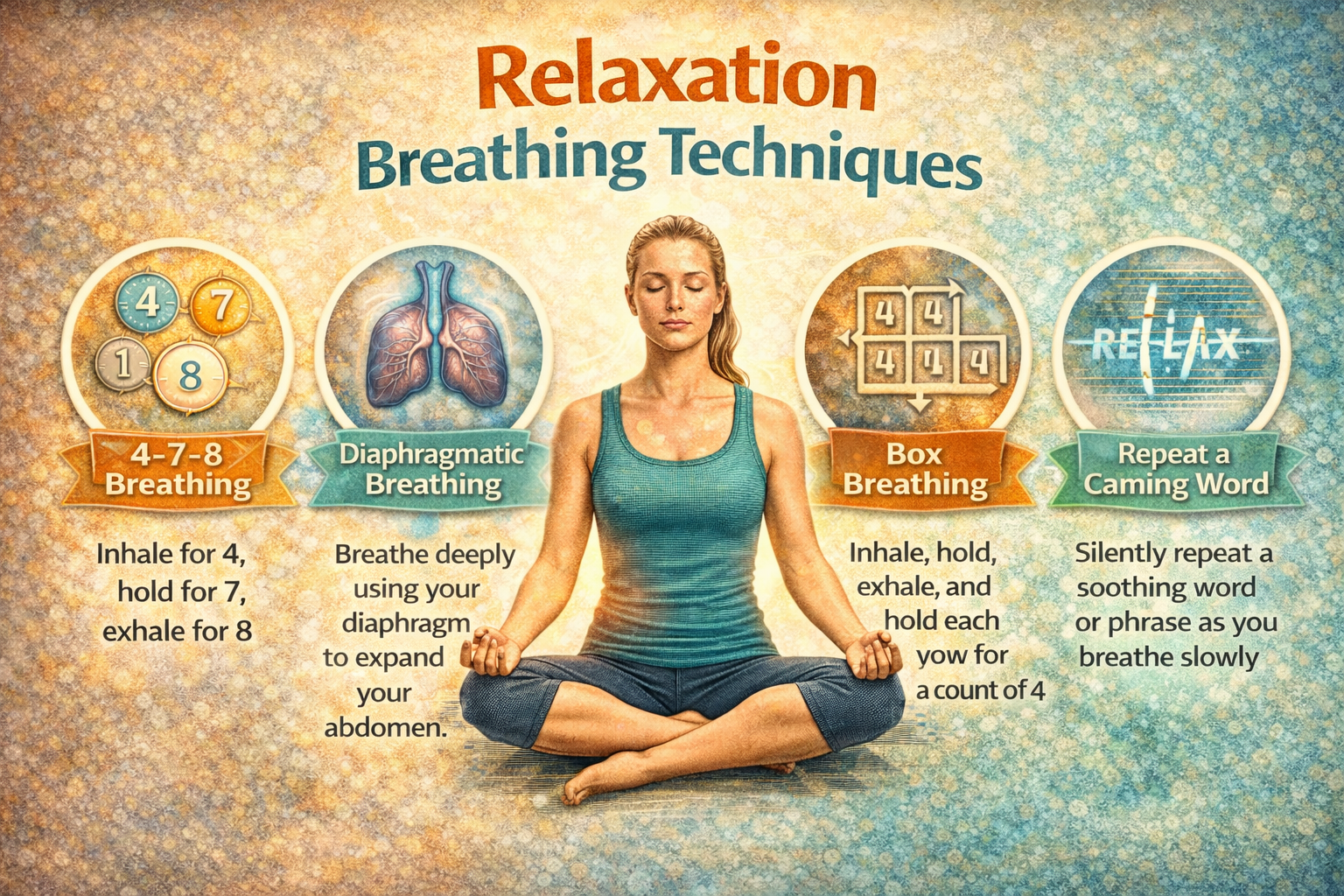
Modern life rewards speed. Your inbox moves fast, conversations move fast, even your coffee cools too fast. The nervous system, however, was not designed for permanent urgency. One of the simplest ways to encourage balance is something you are already doing: breathing.
Slow breathing techniques focus on reducing the number of breaths per minute and extending the exhale slightly longer than the inhale. From a physiological perspective, this pattern encourages activation of the parasympathetic nervous system — the branch associated with rest, digestion, and recovery. In simple terms, slower breathing can signal to the body that it is safe to relax.
A commonly practiced method is 4–6 breathing: inhale through the nose for four counts, exhale gently for six. The longer exhale helps shift attention away from tension and toward steadiness. There is no need to force deep breaths. In fact, overly intense breathing can cause lightheadedness. Comfort and consistency matter more than intensity.
Why does rhythm matter? The heart and lungs are connected through a phenomenon called respiratory sinus arrhythmia. When breathing slows in a smooth pattern, heart rate variability — a marker associated with adaptability and resilience — may improve. This is not a medical treatment. It is simply a natural regulatory mechanism that can be supported through habit.
Practical application is straightforward. Try setting aside five minutes in the evening. Sit upright, relax your shoulders, and breathe quietly through your nose. Count softly in your mind. If thoughts appear, notice them and return to the rhythm. Over time, the body often learns to associate this pattern with relaxation.
Consistency is more important than duration. Two to five minutes daily can be more beneficial than one long session per week. Think of it like brushing your teeth — maintenance rather than emergency repair.
Breathing is not a miracle solution. It will not erase life’s challenges. But it can provide a steady anchor in the middle of them. And that small anchor, repeated daily, can subtly reshape how you respond to stress.